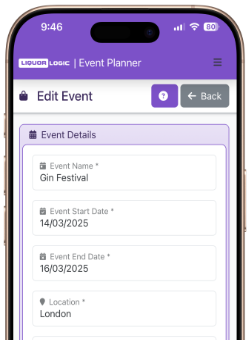
For many South African wineries, distilleries, and breweries, events are no longer a sideline. Cellar-door tastings, weddings on the estate, corporate functions, gin-school evenings, and taproom launches can contribute a significant share of annual revenue, often at better margins than wholesale. But events are also where money quietly leaks: double bookings, unbilled extras, stock that walks out the door, and casual staff costs that never get matched to the function they worked. This guide covers how producers can run event hire and venue management as a disciplined, profitable operation.
Why Events Are a Serious Revenue Stream for Producers
A producer's venue has three advantages a conventional events company cannot match: the product is made on site, the setting sells itself, and every guest is a potential direct-to-consumer customer afterwards. A wine estate that hosts a 120-guest wedding is not just earning a venue fee; it is pouring its own product at retail-equivalent margins, showcasing its brand, and collecting contact details for future CRM and repeat sales.
The economics only work, though, if you can answer three questions for every function: what did we quote, what did we actually consume, and what did it really cost us? Most producers cannot, because bookings live in a diary, stock lives in a storeroom, and invoices live in an accounting package that never hears about either.
Booking Management: One Calendar, One Source of Truth
Producers who host events juggle venue availability, equipment hire (tables, glassware, sound), catering coordination, and staff scheduling for bartenders, tour guides, and security. When these live in separate spreadsheets and WhatsApp threads, double bookings and forgotten details are inevitable.
A structured booking system treats each event as an order: dates, spaces, equipment, staff, and product allocations all attached to one record. Deposits and payment milestones are tracked against the booking, so nothing is confirmed without money in the bank, and nobody has to reconstruct an agreement from an email chain six weeks later.
Linking Events to Stock: Where the Losses Hide
An event is stock leaving the building: bottles, kegs, garnishes, glassware. Without a link between the function and your inventory system, consumption gets estimated after the fact, breakage disappears into "shrinkage", and bonded or duty-paid stock distinctions get blurred, which becomes a real problem in an excise audit.
- Allocate stock per booking before the event, so the bar is provisioned deliberately rather than raided from the cellar.
- Deduct actual consumption during or immediately after service, with returns counted back in.
- Keep the audit trail: for producers holding stock under bond, event consumption must be traceable to a duty-paid movement. An integrated system records this automatically; a clipboard does not.
From Quote to Invoice Without Loose Ends
Every function should produce one itemised invoice covering venue hire, equipment, product served or sold, and additional staffing, reconciled against the original quote. When the events module and the accounting side share data, the gap between "what we quoted" and "what we billed" goes to zero, and deposits, balances, and refunds stop being manual bookkeeping exercises.
Know Your Margin Per Event Type
Not all functions are equal. Weddings gross the most but consume the most staff hours; a 25-seat gin tasting might net more per hour than a 200-guest year-end party. With event revenue and direct costs captured in one system you can report on total revenue versus direct cost per function, most profitable event formats, and average spend per guest, and then shape your sales effort around the formats that actually pay.
Compliance Notes for South African Producers
Events on a production site sit inside the same regulatory framework as the rest of the business: your liquor licence conditions determine where and when product may be served, and consumption of own product still has excise implications if that stock was under bond. Producers running regular functions should make sure event consumption flows through the same compliance records as any other stock movement, not around them.
Frequently Asked Questions
How should a winery or distillery price venue hire?
Start from direct costs (staff hours, cleaning, equipment, power) plus a contribution to overheads, then benchmark against local venues without production facilities. Producers can often price at a premium because the setting and the product are part of the offer, but only per-event margin reporting will tell you whether a package is actually profitable.
How do we stop stock disappearing at events?
Allocate stock to the booking beforehand, issue it to the event bar as a recorded transfer, and count returns back in afterwards. The discipline of allocation and return, enforced by software rather than memory, removes most unexplained losses.
Do we need separate software for events if we already have a POS?
A point of sale handles walk-in taproom trade well, but functions need deposits, quotes, resource scheduling, and per-event costing that a till cannot provide. The ideal is one platform where the events module, POS, inventory, and invoicing share the same stock and customer data.
Conclusion
Event hire is a competitive edge for producers who run it with the same discipline as production. Centralise bookings, tie every function to stock and staff, invoice from actuals, and measure margin per event type. Liquor Logic's event management module does exactly this, connected to the same inventory, POS, and accounting data as the rest of your operation. Book a demo to see it on your own numbers.